
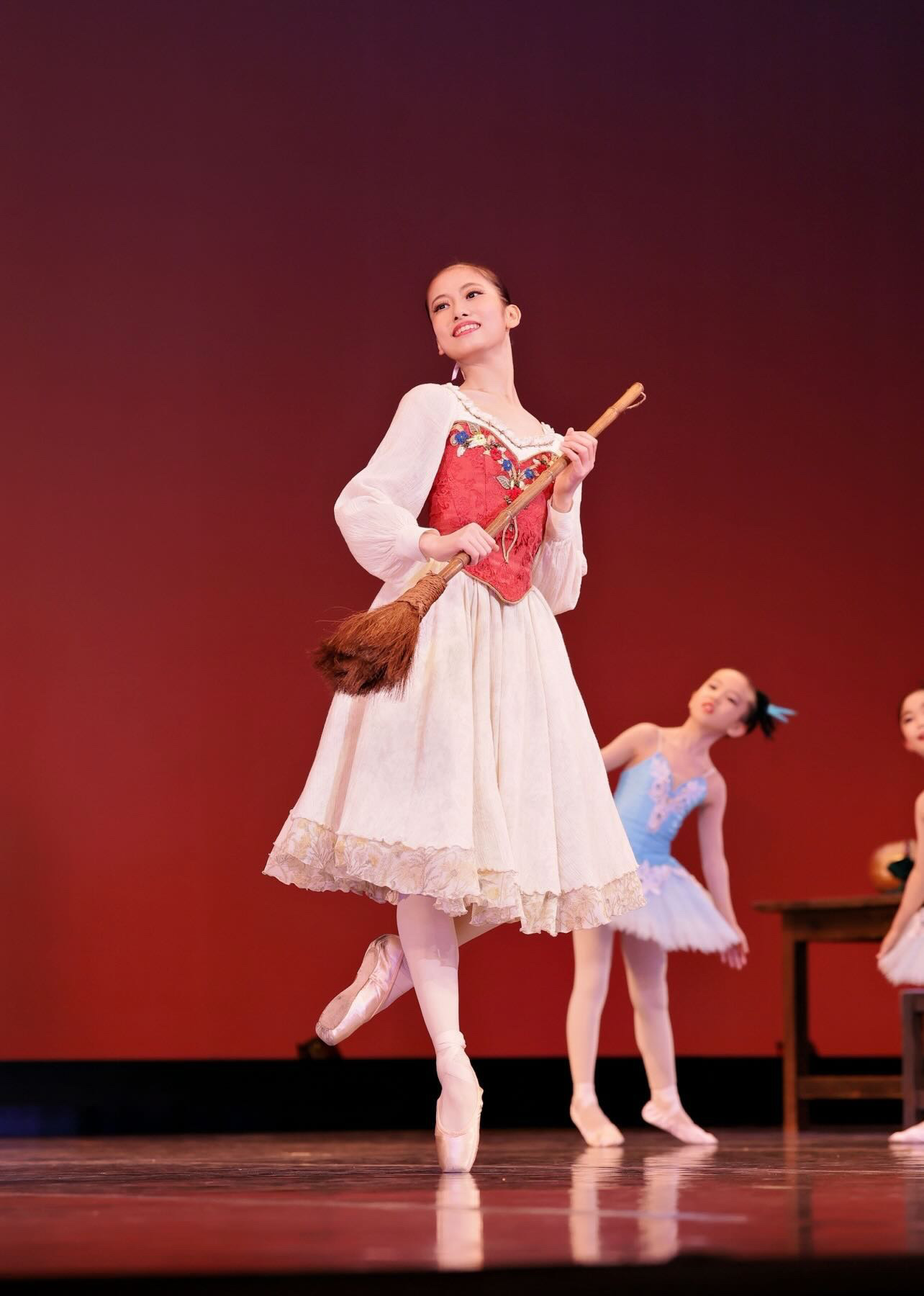
Discovering the Power of Emotion in Ballet
Featuring Sawa Matsumoto
For many young ballet dancers, improvement means chasing cleaner technique, higher extensions, stronger turns, and a more ideal ballet body. Many believe that expression is merely a polish applied after the technique is flawless; beautiful technique is what makes ballet meaningful, and everything else comes after. For years, Sawa, a passionate ballerina from Japan, once believed the same equation: perfection equals success. She thought that breathtaking technique was the only thing separating a good dancer from a great one.
Everything shifted, however, when she began rehearsing the Étoile variation from Paquita. The choreography challenged her technically, but that was not what paralyzed her. It was the character itself. “I’ve always struggled with smiling and expressing my emotions to the audience,” Sawa shares, and she naturally found it difficult to portray a character like Etoile. In the ballet, this variation marks the triumphant wedding celebration of Paquita, a young woman who saves a French officer’s life and uncovers her own hidden noble heritage through a childhood medallion. To bring the role to life, a dancer must embody pure, uninhibited joy, and a celebratory radiance that captivates the entire audience. For Sawa, stepping into that level of expressive warmth felt daunting. There was also pressure on executing every step correctly and avoiding failure, which left little room left to simply exist inside the dance or feel the joy of the movement. As rehearsals continued, she found herself stuck; the harder she tried to force the performance and perfect the choreography, the more distant the dance felt.
Seeing her frustration, her ballet school's mental coach began working with her one-on-one while her regular ballet teacher observed the rehearsals. In Japan, the collaboration between a ballet teacher and a mental coach highlights a unique aspect of high-level dance training: the distinct separation between technical instruction and emotional coaching. While the ballet teacher polishes the physical choreography, the mental coach acts as an emotional trainer, guiding the dancer to map specific memories and raw feelings to their movements so they can project authentic hyogen-ryoku (expressive power) on stage. So instead of correcting Sawa’s technique, the mental coach asked a different question.
Who was the Étoile? What kind of woman was she? What was she feeling as she stood on stage?
The question had nothing to do with ballet technique, yet it unlocked everything. Rather than counting steps, Sawa began imagining a real person, and instead of worrying about whether her smile looked convincing, she focused on why the character would smile in that moment. Little by little, the expressions she had always forced began to appear naturally as she lived truthfully within the character.
“By fully embodying the role,” she said, “I was able to naturally express expressions and emotions that I would normally have been too embarrassed to show.” As that emotional wall crumbled, her body followed; “the complex technical passages that had tripped me up for weeks suddenly clicked into place,” Sawa expressed, “and I realized that everything in the dance became connected through expressing the character.” When the music faded, she stood panting and exhausted, waiting patiently for the usual list of corrections from her ballet coach. But seconds ticked by in uncharacteristic silence. Sensing the heavy, lingering stillness, Sawa finally looked up. Her ballet teacher was standing silently across the studio, with tears streaming down her cheeks. Stunned by the overwhelming reaction, Sawa felt her own eyes well up with tears.
In that quiet moment, a profound truth shattered her old beliefs: “Until then, I had thought that in ballet, technically beautiful dancing was the most important thing, and emotional expression was secondary. But seeing my teacher cry, I realized that even if my technique wasn't perfect, I could still make people feel something through my dancing.”
From that rehearsal onwards, Sawa not only thought of dancing well, but also about what she wanted to convey through dance as an artist. “Of course, I'm happy when I can perform difficult techniques, but even more than that, I'm happiest when I can move the hearts of the audience. If someone feels something through my dancing, or if something lingers in their mind after they've seen the performance, that's the greatest joy for me as a dancer.”
That experience also sparked her love for narrative acting. Though acting had never come naturally to her, once she experienced the power of connecting emotionally with a role, she wanted to understand every character she portrayed deeply.
When she was cast as the lead in Snow White the following December, she immersed herself in the story long before stepping on stage. “I carefully considered what Snow White was thinking, feeling, and why she took certain actions,” Sawa said. She also paid close attention to how she presented herself as Snow White to others, including meticulous consideration over every glance, every angle of her face, and even the subtle placement of her hands. The performance became more than executing choreography—it became an opportunity to tell a story. Afterward, when several of her teachers were moved to tears, Sawa “strongly reaffirmed [her] desire to become a dancer who can move the hearts of audiences with [her] own dancing and expression.”
Today, although Sawa still honors technique as an essential part of ballet, she no longer sees it as the ultimate goal or a measure of her worth as an artist. High technical skill alone isn't always enough to move the hearts of an audience, and conforming oneself to this ideal of ballet is not the only way to grow.
Like so many dancers, Sawa still faces quiet moments of self-doubt when looking in the mirror and feeling that her body does not fit traditional industry expectations. “I often look in the mirror and think I'm not suited for ballet, that I should quit,” Sawa admits. The pressure to fit a rigid physical mold can make even the most dedicated artist feel inadequate. “Ballet certainly has physical requirements and technique standards. However, as I continued to dance, I came to believe that it's more important to use what's unique to me in my dancing than to compare my technique or physical condition to someone else's.”
She points out that even when two dancers execute the exact same choreography, the performance will never land the same way, because an artist’s heart, background, and personal movement quality are entirely their own. The lines of a leg or the shape of a foot can be analyzed, but the ability to make an audience feel something comes directly from within.
Instead of solely pushing yourself on perfect technique or looking in the mirror and deciding that your body is "not suited for ballet," Sawa urges young dancers to reframe the conversation entirely and ask themselves: "What kind of expression can only I create?" Refusing to let the impossible ideal of perfection dictate her goal as an artist is an important step towards furthering one’s relationship with dance. True growth doesn't come from forcing yourself into someone else's mold or obsessing over physical flaws; it comes from leaning into your innate strengths, honoring your individuality, and trusting that what you bring to the stage is irreplaceable. In the end, ballet is about telling a story to leave the audience with a feeling they carry home long after the curtain falls.
多くの若いバレエダンサーにとって、上達とは、より洗練されたテクニック、より高く伸びる脚、より力強いターン、そしてより理想的なバレエ体型を追求することです。表現力は、テクニックが完璧になった後に磨くものだと考える人も少なくありません。美しいテクニックこそがバレエに意味を与え、その他すべてはその後についてくるものだと。長年、情熱的な日本のバレリーナ、紗和も同じように考えていました。完璧こそが成功だと。息を呑むようなテクニックこそが、優れたダンサーと偉大なダンサーを分ける唯一の要素だと彼女は信じていたのです。
しかし、パキータのエトワールのヴァリエーションのリハーサルを始めたとき、すべてが変わりました。振り付けは技術的に彼女にとって難しかったのですが、彼女を苦しめたのはそこだけではありませんでした。彼女を苦しめたのは、役柄の表現でした。「私は昔から、笑顔を見せたり、観客に感情を表現したりするのが苦手なんです」と紗和は語ります。そして、エトワールのような役柄を演じるのは、当然ながら難しいと感じていたのです。このバレエでは、このバリエーションは、フランス人将校の命を救い、幼い頃に見つけたメダルを通して自身の隠された貴族の血筋を知る若い女性、パキータの凱旋結婚を祝う場面を表しています。この役を生き生きと表現するには、ダンサーは純粋で奔放な喜びと、観客全員を魅了する祝祭的な輝きを体現しなければなりません。紗和にとって、そのような表現のレベルに踏み込むことは、まだまだ先のことだと思っていました。また、すべてのステップを正しく、失敗をしないようにするプレッシャーもあり、踊りの中の結婚の喜びを感じたり表現する余裕はほとんどありませんでした。リハーサルが続くにつれて、彼女は行き詰まっていくのを感じました。パフォーマンスを無理に作り上げ、テクニックを完璧にしようとすればするほど、踊りは遠ざかっていきました。
彼女が行き詰まっていくのを見て、バレエ学校のメンタルコーチは、通常のバレエ教師がリハーサルを見守る中、彼女とマンツーマンで指導を始めた。しかし、コーチは彼女のテクニックを修正するのではなく、別の質問を投げかけた。
エトワールとは誰なのか?彼女はどんな女性なのか?舞台に立っている時、彼女は何を感じているのか?
この質問はバレエのテクニックとは全く関係なかったが、紗和の中で踊るとは何かという考えが大きく変わった。紗和はただ振付をこなすのではなく、実在の人物を想像し始め、笑顔が自然に見えるかどうかを気にするのではなく、なぜその人物はその瞬間に微笑むのかに焦点を当てた。少しずつ、これまで無理に表現していた表情が、役柄に真摯に向き合うにつれて自然に現れ始めた。
「役柄を完全に体現することで、普段なら恥ずかしくて見せられなかった表情や感情を自然に表現できるようになりました」と彼女は語った。その壁が崩れていくと、彼女の技術すらも変わっていった。 「何週間もつまずいていた難しいテクニックが、突然カチッとハマったんです」と紗和は語り、「キャラクターを表現することで、ダンスのすべてが繋がっていることに気づきました」と続けた。音楽が消えると、紗和は息切れして疲れていたが達成感も感じていた。いつものようにバレエコーチからの修正の指示を待っていた。しかし、いつもとは違って、スタジオは静寂のままだった。重苦しい静けさを感じて、紗和はついに顔を上げた。バレエの先生がスタジオの奥に立っていて、頬には涙が流れていた。その想像もできなかった反応に驚いた紗和は、自分の目にも涙が溢れてくるのを感じた。
その静かな瞬間に、メンタルコーチが話していたことが完全に結びつき、彼女の中にあったこれまでの信念を揺るがしました。「それまで、バレエでは技術的に美しく踊ることが最も重要で、感情表現は二の次だと思っていました。しかし、先生が泣いているのを見て、たとえテクニックが完璧でなくても、ダンスを通じて人々に何かを感じてもらうことができると気づきました。」
そのリハーサルから、紗和さんはただ上手く踊ることだけではなく、アーティストとして踊りを通して何を伝えたいのかを考えていました。 「難しい技を踊れるようになったときはもちろん嬉しいですが、それ以上にお客さんの心を動かすことができたときが一番嬉しいです。私のダンスを通して誰かが何かを感じてくれたり、パフォーマンスを観た後に何かが心に残ってくれたら、それがダンサーとして一番の喜びです。」
この経験は、彼女の物語演技への愛にもつながりました。これまで演技が自然にできるようになったわけではありませんでしたが、役と感情的につながる力を経験すると、自分が演じたすべてのキャラクターを深く理解したいと思うようになりました。
昨年12月に『白雪姫』の主役に抜擢されたとき、彼女は舞台に上がるずっと前から物語に没頭してしました。「白雪姫が何を考え、何を感じ、なぜその行動を取ったのかを注意深く考えました」と紗和さんは語った。彼女はまた、自分を白雪姫として他の人にどのように見せるかにも細心の注意を払い、すべての視線、顔のあらゆる角度、さらには微妙な手の位置にまで細心の注意を払いました。その白雪姫の踊りはただ振付を踊るだけではなく、ストーリーを語るものになりました。その後、何人かの先生が感動して涙する中、紗和さんは「自分の踊りと表現で観客の心を動かせるダンサーになりたい」と強く決意しました。
紗和はバレエにおいて技術が不可欠な要素であることに変わりはないものの、それを究極の目標やアーティストとしての価値を測る尺度とは考えていない。高い技術力だけでは必ずしも観客の心を揺さぶることはできないし、バレエが求める理想に自分を合わせることだけが、成長ではないと考えている。
多くのダンサーと同様に、紗和も鏡に映る自分の姿を見て、バレエの世界が求める体の条件に自分の体が合っていないと感じ、自分に自信を失ってしまうことがある。「鏡を見ると、自分はバレエに向いていない、辞めた方がいいんじゃないかと思うことがよくあります」と紗和は打ち明ける。厳格な理想の体型に合わせようとすることは、どんなに献身的なアーティストでもプレッシャーを抱かせることがある。「バレエには確かに身体的な要求や技術基準があります。しかし、踊り続けるうちに、自分の技術や体型を他人と比較するよりも、自分ならではの個性を活かすことが大切だと考えるようになりました。」
彼女は、たとえ二人のダンサーが全く同じ振り付けを踊ったとしても、パフォーマンスは決して同じようにはならないと指摘する。なぜなら、ダンサーの心、背景、そして動きの質は、完全にその人独自のものであるからだ。脚のラインや足の形は分析できるが、観客に何かを感じさせる力は、まさに内面から湧き上がってくるものなのだ。
完璧なテクニックだけを追求したり、鏡を見て「自分の体はバレエには向いていない」と決めつけたりするのではなく、紗和は若いダンサーたちに、考え方を根本から変えて、「私にしか生み出せない表現とは何だろう?」と自問自答するよう促す。完璧という不可能な理想に囚われずに自分だけの個性を見つけることはダンスとの関係を深める上で重要な一歩となる。本当の成長は、他人の型にはめられたり、身体的な欠点に執着したりすることから生まれるのではない。生まれ持った強みを活かして個性を尊重することで、舞台にもたらすものはかけがえのないものだと信じることからなのだ。結局のところ、バレエとは、観客が幕が下りた後も長く心に残るような感動を与える物語を語ることなのだ。
Photos
Comments (0)
No comments yet. Start the conversation!